How to Use Quizzes for Employee Onboarding
Published 3/16/2026Last Updated 5/21/2026By Cyril Gaillard
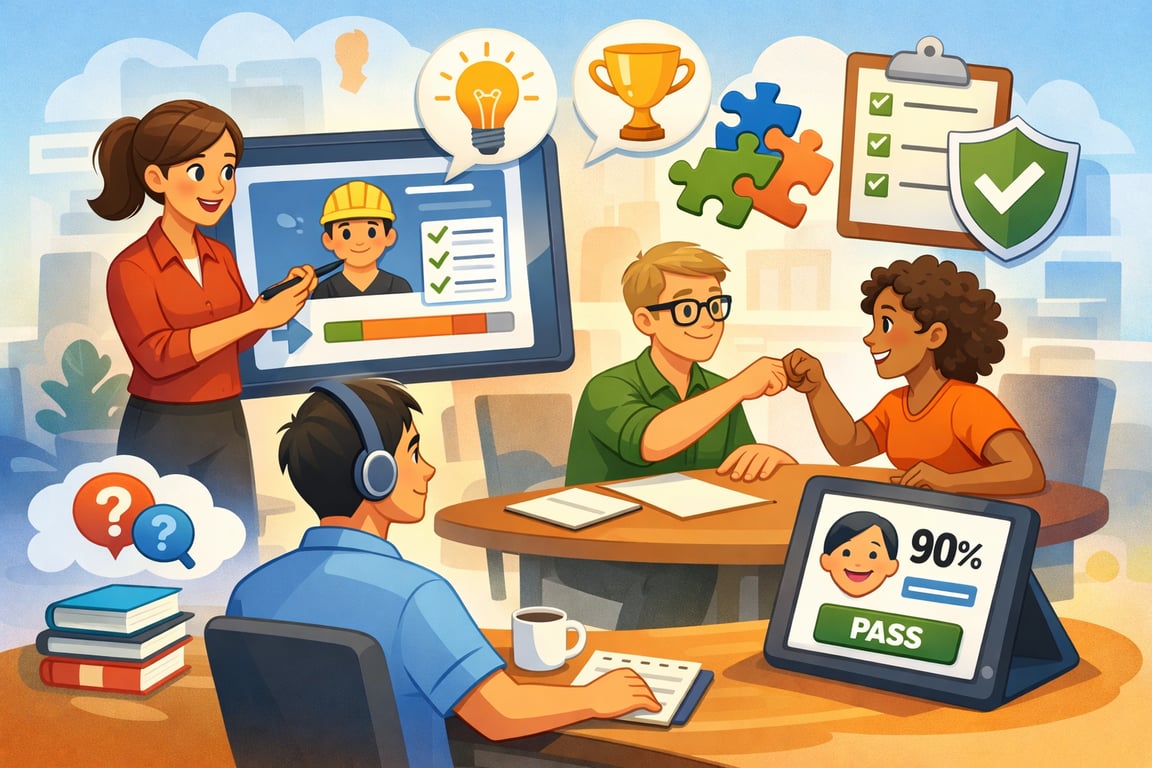
Interactive quizzes turn employee onboarding from a passive information dump into an engaging, measurable experience. Learn seven practical ways to use quizzes during onboarding — from compliance verification to team icebreakers — plus best practices for building quizzes that new hires actually enjoy.
Learn 7 practical ways to use interactive quizzes during employee onboarding. Boost knowledge retention, verify compliance, and engage new hires from day one.
Why Quizzes Belong in Your Onboarding Process
The first few weeks at a new job are overwhelming. New hires are flooded with policies, procedures, tool walkthroughs, and cultural norms — all while trying to remember where the coffee machine is. Traditional onboarding methods like lengthy slide decks and dense handbooks often fail to make information stick. That's where quizzes come in.
Interactive quizzes transform passive information consumption into active learning. Instead of hoping employees absorbed a 40-page handbook, you can verify understanding in real time, identify knowledge gaps early, and give new team members a sense of accomplishment as they progress through onboarding milestones.
Whether you're onboarding five people a year or five hundred, quizzes offer a scalable, consistent, and measurable way to bring new employees up to speed. And with an interactive quiz maker, building them takes far less effort than you might think.
The Business Case: Onboarding Done Right Pays Off
Poor onboarding is expensive. When employees don't feel prepared or connected in their first months, they're far more likely to disengage — or leave entirely. The data paints a clear picture of why investing in structured, interactive onboarding matters.
Quizzes directly address these challenges. They reinforce learning, signal to new hires that the company takes their development seriously, and give HR teams concrete data on how well onboarding content is landing. When you can analyze quiz results, you're no longer guessing whether your onboarding program works — you know.
7 Ways to Use Quizzes During Employee Onboarding
Quizzes aren't one-size-fits-all. Here are seven practical ways to weave them into different stages of your onboarding journey.
1. Company Culture & Values Check
Create a quiz that tests understanding of your mission, values, and workplace norms. This isn't about trick questions — it's about reinforcing what matters most. A well-crafted personality-style quiz can even help new hires discover which company value they most align with, making the experience feel personal rather than procedural.
2. Policy & Compliance Verification
Compliance training is non-negotiable, but it's also notoriously dull. A short quiz after each compliance module keeps employees engaged and creates a documented record that they understood the material — useful for audits and legal requirements alike.
3. Tool & System Proficiency
Does your team use Slack, Jira, Salesforce, or internal platforms? Quiz new hires on key workflows and features after their training sessions. This helps identify who needs extra support before small gaps become big productivity drains.
4. Role-Specific Knowledge Assessments
Use an assessment maker to build quizzes tailored to each department or role. A sales hire might be quizzed on product features and objection handling, while an engineer might face questions about deployment processes and code review standards.
5. Team Introduction & Social Icebreakers
Onboarding isn't just about information — it's about connection. Create a fun "Who's Who" quiz featuring team members' hobbies, fun facts, or photos. It's a lighthearted way to help new hires put names to faces and spark conversations.
6. Safety & Workplace Procedures
For roles involving physical workspaces, warehouses, or labs, safety quizzes are essential. Test knowledge of emergency exits, equipment handling, and reporting procedures. These quizzes can literally save lives.
7. 30-60-90 Day Milestone Reviews
Don't limit quizzes to the first week. Schedule knowledge checks at 30, 60, and 90 days to measure retention over time. This spaced repetition approach dramatically improves long-term recall and gives managers early warning signs if someone is struggling.
"The goal of onboarding isn't to overwhelm people with information — it's to build confidence. Quizzes give new hires a way to prove to themselves that they're learning, and that feedback loop is incredibly motivating."
— Josh Bersin, HR Industry Analyst
Best Practices for Onboarding Quizzes
A poorly designed quiz can be just as disengaging as a boring handbook. Follow these principles to make your onboarding quizzes effective and enjoyable.
Keep them short and focused. Each quiz should cover one topic and take no more than 5–10 minutes. New hires already have plenty on their plates — respect their time and cognitive load.
Use a mix of question types. Multiple choice, true/false, image-based questions, and scenario-based prompts all serve different purposes. Variety keeps things interesting and tests understanding at different levels.
Provide instant feedback. Don't just mark answers right or wrong — explain why. Immediate feedback turns every question into a micro-learning moment. This is where a good quiz maker makes all the difference, letting you add explanations to each answer option.
Make it low-stakes (at first). Early onboarding quizzes should feel supportive, not punitive. Frame them as learning tools rather than tests. As employees settle in, you can introduce more formal assessments for compliance or certification purposes.
Track and iterate. Pay attention to which questions most people get wrong. If 80% of new hires miss the same question, the problem likely isn't the employees — it's the training material. Use quiz analytics to continuously improve your onboarding content.
Brand the experience. Your onboarding quiz should look and feel like your company. Custom colors, your logo, and a friendly tone of voice all signal professionalism and care. First impressions matter, and your quiz is part of that impression.
How to Get Started With Fyrebox
Building onboarding quizzes doesn't require a team of instructional designers or weeks of development time. With Fyrebox, you can create polished, interactive quizzes in minutes — no coding required.
Start by outlining the key topics your onboarding program covers. Then create one quiz per topic, keeping each focused and concise. Use Fyrebox's built-in analytics to monitor completion rates and scores, and connect your quizzes to tools your HR team already uses through integrations with platforms like Zapier, Google Sheets, and more.
You can share quizzes via direct link, embed them in your internal wiki or LMS, or send them through email sequences timed to each stage of the onboarding journey. The flexibility means quizzes fit into your existing workflow rather than replacing it.
For teams that want to move fast, Fyrebox's AI-powered quiz generation can turn your existing onboarding documents into ready-to-use quizzes — so you spend less time building and more time welcoming your newest team members.
Build Your First Onboarding Quiz Today
Create interactive, branded quizzes that make employee onboarding engaging, measurable, and effective. Get started with Fyrebox for free — no credit card required.
Create a Free Quizemployee onboarding hr quizzes training knowledge assessment quiz maker